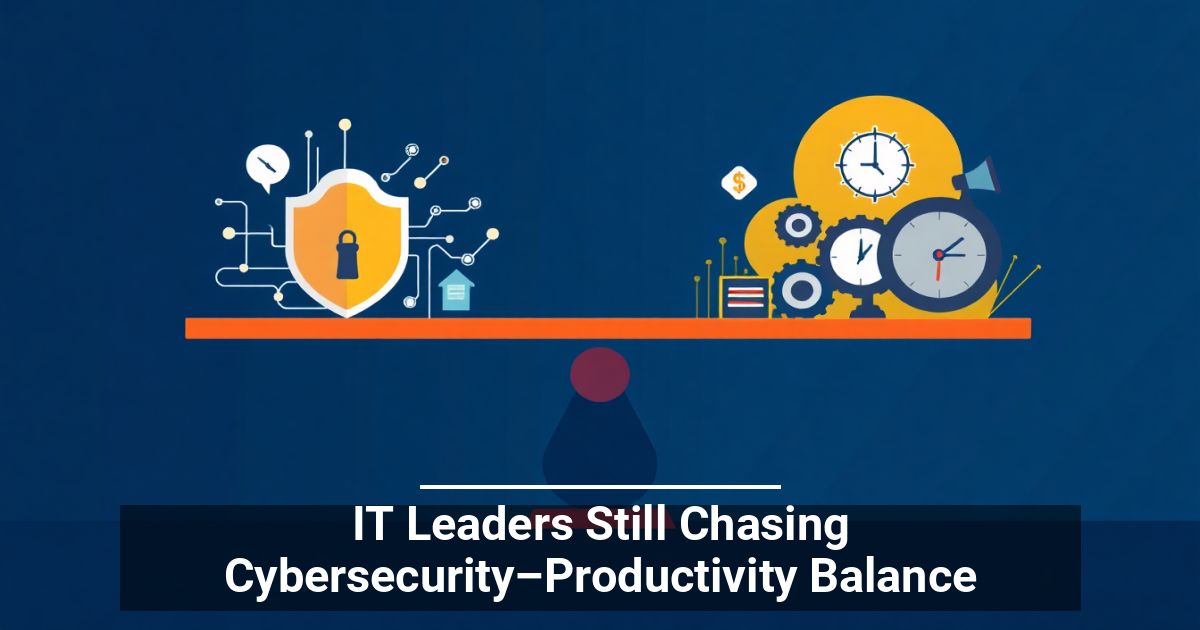
Finding the right balance between cybersecurity and productivity is harder than it sounds.
Recent research from JumpCloud and Google Workspace uncovered a telling statistic: only 6% of IT leaders believe their current office software setup works the way it should. That means the overwhelming majority—94%—are dealing with a mix of rising costs, security concerns, and growing complexity.
This challenge extends well beyond IT teams. Fragmented technology slows employees down, increases risk, and quietly erodes profitability. When systems don’t work together, businesses pay the price in lost time, frustration, and exposure to security threats.
As companies juggle tighter budgets, stronger security demands, and increasingly complex tech stacks, many are searching for ways to protect data without getting in the way of how people actually work. For many organizations, this is a chance to step back, reassess, and build a more streamlined, secure foundation.
What’s Actually Frustrating IT Teams Today?
If managing too many applications and logins feels overwhelming, you’re not imagining it. IT leaders report overseeing an average of nine separate tools, which often leads to constant troubleshooting and reactive work. Common pain points include excessive administrative tasks, complicated security configurations, and pricing models that feel anything but transparent.
For business owners, this highlights an important truth: balancing IT security and workplace productivity directly affects morale, retention, and performance. When technology slows people down or complicates collaboration, teams disengage and productivity suffers.
Overly restrictive security can also backfire. Frustrated employees are more likely to seek shortcuts or unofficial tools, creating new vulnerabilities. Poor integration between systems only widens those gaps, giving attackers more opportunities to exploit weaknesses.
The end result for many organizations is an IT environment that feels disjointed and inefficient.
Why Unified, Secure Platforms Are Gaining Momentum
The data points to a clear shift. According to the research, 87% of IT leaders are open to replacing their current productivity tools in favor of a more unified and secure platform.
The goal isn’t just better security—it’s alignment. When IT infrastructure and user experience are designed together, organizations can simplify operations while still maintaining strong protections. Reducing tool sprawl makes management easier, lowers training costs, and improves consistency across the business.
Business leaders should look for platforms that support secure collaboration without adding friction. Cloud-based tools, for example, can offer encryption, access controls, and real-time collaboration while keeping workflows smooth. When identity management and security policies are built directly into everyday tools, IT teams gain visibility and control without slowing everyone else down.
Security and productivity aren’t competing goals. With the right approach, they reinforce each other.
Finding the Right Balance Moving Forward
IT leaders are actively searching for better ways to strike the cybersecurity–productivity balance. By understanding where security creates friction—and where it adds value—business owners can build systems that protect data while supporting efficient work.
Now is the time to evaluate existing tools, consolidate where possible, and invest in platforms designed with secure collaboration in mind. A well-balanced IT environment doesn’t just reduce risk—it makes day-to-day work faster, cleaner, and more effective.
Learn about our managed and co-managed IT Services
Book a 15 minute Discovery Call