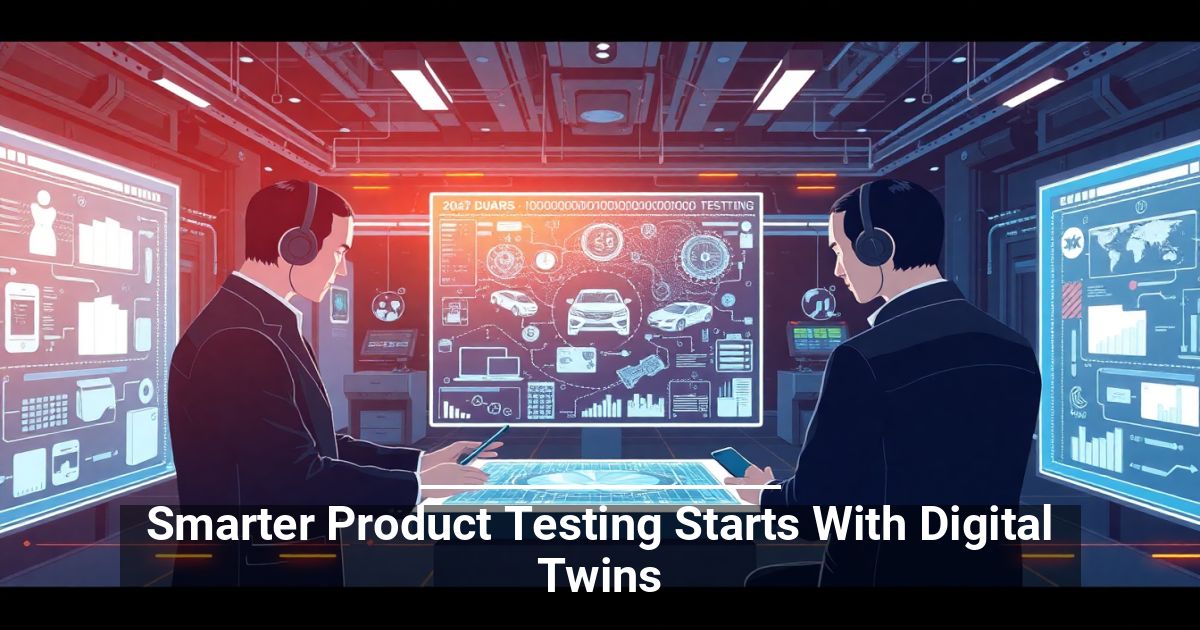
If your business wants to reduce risk, accelerate product innovation, and make better decisions before products hit the market, digital twins are a game-changer.
A digital twin is a virtual replica of a product, system, or process that mirrors its real-world behavior. From manufacturing equipment to supply chains, digital twins let you simulate performance, test scenarios, and uncover potential issues—all before building or launching anything physically.
What Is a Digital Twin?
Digital twins are virtual clones that replicate a system’s behavior in its actual operating environment. They combine multiple models and real-time data sources, processing variables like temperature, pressure, usage patterns, and more. This approach creates a living, data-driven representation, giving engineers and decision-makers a much more accurate view than traditional simulations.
Beyond Traditional Simulation
Traditional testing methods usually examine one factor at a time—stress tolerance, thermal performance, or workflow efficiency. But products operate in complex, interconnected systems. Digital twins allow New Jersey businesses to model how multiple variables interact dynamically.
For example, you can simulate:
- Equipment wear and tear over time
- Production bottlenecks or supply chain delays
- Material or design changes and their impact on costs and performance
These “what-if” scenarios would be expensive, risky, or impossible to replicate physically, but digital twins make them practical and precise.
From Concept to Launch
Using digital twins shifts product development from reactive problem-solving to proactive design. Engineers can test different materials, configurations, or features virtually, speeding up development cycles and reducing R&D costs. Data-driven simulations allow marketing, operations, and engineering teams to collaborate around a single source of truth, improving decisions and reducing misalignment.
Testing Entire Systems
Digital twins aren’t just for individual products—they can simulate entire production lines or supply chains. This holistic approach answers critical questions before real-world investment:
- How will material changes affect shipping weight and costs?
- Will seasonal demand spikes strain fulfillment operations?
- How do design adjustments ripple through multiple systems?
By modeling the full ecosystem, businesses gain greater control, reduce risk, and make smarter investments.
Start Small and Scale
Many New Jersey businesses begin with digital twins for the most critical products or problem-prone components, expanding as results prove their value. Over time, digital twins provide a continuous feedback loop that improves quality, accelerates innovation, and reduces costly surprises.
Investing in digital twin technology today positions your business for smarter product testing, faster time-to-market, and better decisions across operations, design, and supply chain management.