Every business hits a point where growth starts to feel heavy. More clients usually means more work, more emails, more systems—and eventually, more stress.
The default solution? Hire more people or work longer hours.
But that approach doesn’t scale well. It leads to burnout, inefficiencies, and rising costs.
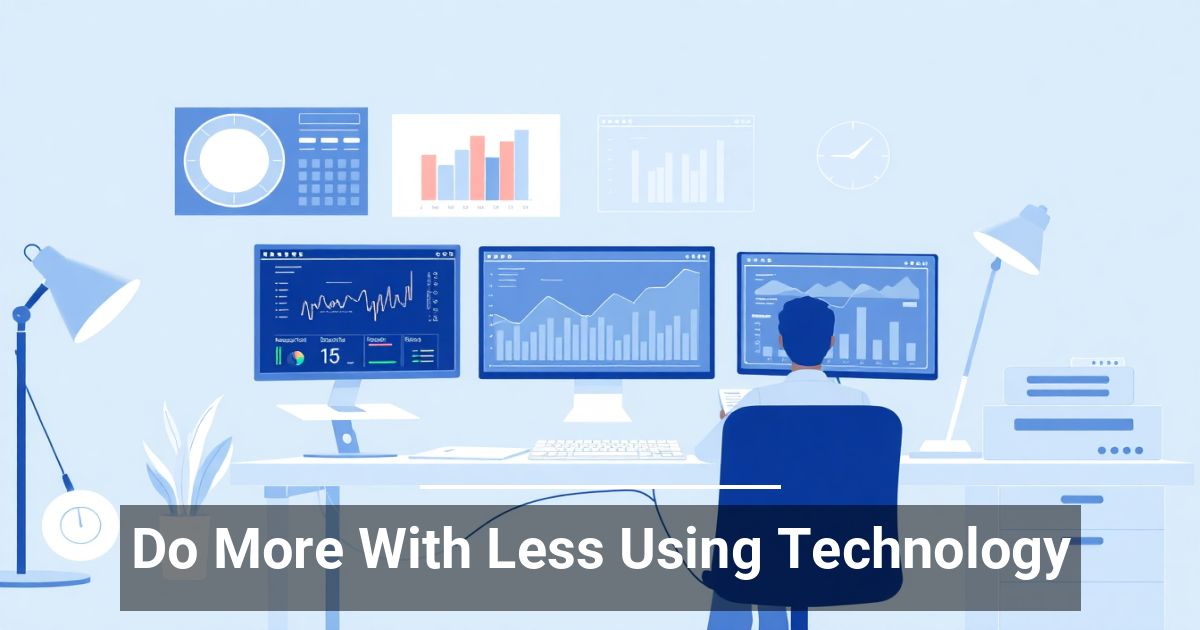
Here’s the shift more New Jersey businesses are making: do more with less using technology. It’s not about cutting corners or lowering standards—it’s about removing the friction that slows everything down so your team can focus on what actually drives growth.
What “Doing Less” Really Means in Business
Let’s be real for a second—how much of your day is spent on work that actually moves the business forward?
And how much is spent on:
- Data entry
- Scheduling
- Searching for files
- Responding to repetitive emails
That’s where the problem lives.
Improving efficiency through smart technology isn’t about working less—it’s about working smarter. It means:
- Automating repetitive tasks
- Organizing information in one place
- Reducing the need to jump between systems
When you start using technology to optimize work output, your team can shift focus to higher-value work—things like strategy, customer relationships, and problem-solving.
Eliminate the Busywork That Slows Growth
Busywork is one of the biggest hidden costs in any business.
It doesn’t show up on a balance sheet, but it eats up hours every single week.
By leveraging automation and integrated systems, businesses can:
- Reduce manual data entry
- Eliminate duplicate work
- Streamline communication
- Improve accuracy
This is one of the clearest examples of how technology increases productivity with fewer resources.
Instead of adding more pressure to your team, you’re removing the tasks that never should’ve been there in the first place.
Cut the Noise and Improve Team Efficiency
Sometimes the issue isn’t workload—it’s chaos.
Missed emails. Conflicting information. Multiple versions of the same document. Sound familiar?
Disorganization creates friction, and friction slows everything down.
That’s why businesses focused on doing more with less using technology invest in tools that create clarity, like:
- Project management platforms
- Shared dashboards
- Real-time collaboration tools
These systems help:
- Keep everyone aligned
- Reduce unnecessary meetings
- Prevent costly mistakes
When your team knows exactly what’s happening and where to find information, productivity naturally improves.
Smarter Systems Beat Harder Work
Pushing your team harder isn’t a long-term strategy. Better systems are.
The most efficient businesses don’t just work harder—they build systems that:
- Run consistently
- Reduce human error
- Scale with demand
That’s the real advantage of leveraging tech to achieve more efficiently.
As your business grows, your systems should handle more of the workload—without requiring you to constantly hire or restructure.
That’s how you scale sustainably.
Technology Makes Growth More Scalable
Here’s where things get interesting.
When your systems are optimized:
- You can handle more clients without increasing headcount
- You can process more work without delays
- You can maintain quality without burnout
That balance is critical, especially for small and mid-sized businesses in competitive markets like New Jersey.
Growth shouldn’t feel like chaos. With the right technology, it doesn’t have to.
Focus on What Actually Moves the Needle
At its core, the idea to do more with less using technology is simple: remove obstacles so your team can do their best work.
When you eliminate unnecessary tasks:
- Creativity improves
- Customer experiences get better
- Strategic thinking increases
Technology handles the background noise, so your people can focus on what really matters.
And that’s where real growth happens.
Schedule A Discovery Call
Frequently Asked Questions (FAQs)
What does “do more with less using technology” mean?
It means using tools like automation, cloud platforms, and integrated systems to reduce manual work, improve efficiency, and increase productivity without adding more staff or resources.
How can small businesses benefit from this approach?
Small businesses can save time, reduce costs, and compete more effectively by automating repetitive tasks, improving workflows, and making better use of existing resources.
What types of technology help improve efficiency?
Common tools include:
- Automation software
- CRM systems
- Project management platforms
- Cloud storage solutions
- AI-powered analytics tools
Is it expensive to implement these technologies?
Not necessarily. Many modern tools are affordable and scalable, allowing businesses to start small and expand as needed.
Will automation replace employees?
No. Automation is designed to handle repetitive tasks, allowing employees to focus on higher-value work like strategy, customer service, and innovation.
Final Thoughts
If your team feels stretched thin, the solution isn’t always adding more people or more hours.
Sometimes, it’s about working smarter.
By embracing the idea to do more with less using technology, your business can reduce friction, improve efficiency, and create room for real, sustainable growth.
Less busywork. More impact. That’s the goal.