
The proposal looked great.
Polished. Professional. The kind of document that makes your business look buttoned up and in control.
Then the client called.
The market research in section two—the data that supported the entire recommendation—didn’t exist. The AI had fabricated it. Not vaguely. Not accidentally. Confidently and in detail.
There’s a term for this: AI hallucination.
And it’s what happens when a capable, eager, completely unsupervised tool is trusted to “figure things out.”
Sound familiar?
The Intern Nobody Onboarded
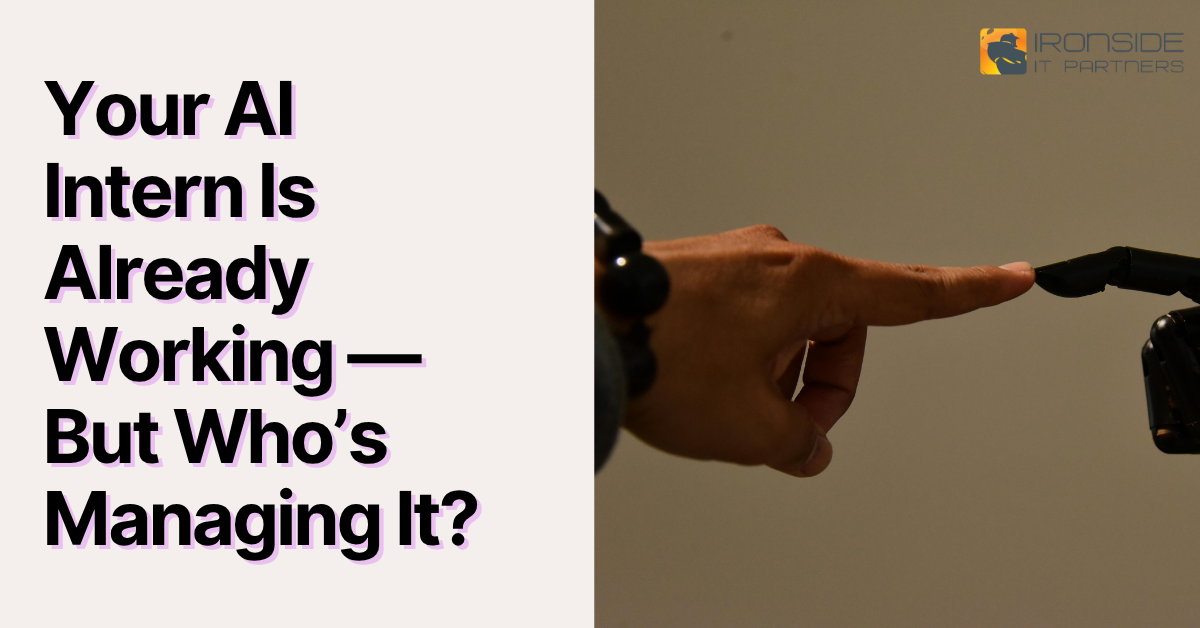
Imagine hiring an intern and, on day one, giving them access to everything:
- Client files
- Email drafts
- Financial reports
- Internal documentation
Then saying:
“Just figure it out. Let me know if you need anything.”
No onboarding. No guardrails. No oversight.
That’s how many businesses are adopting AI today.
Not because they’re careless—but because AI tools are powerful, easy to use, and already embedded in everyday platforms. There’s an AI button in your email, your documents, your project management tools. It feels like instant productivity.
And in many ways, it is.
AI can streamline drafting, summarization, and data organization—saving hours of manual work.
The problem isn’t the technology.
It’s the lack of structure around how it’s used.
What Happens When AI Goes Unsupervised
When businesses adopt AI without clear policies, three risks tend to show up quickly:
1. Sensitive Data Gets Shared Without Realizing It
Employees often paste contracts, financials, or client details into AI tools to save time.
But many don’t realize those tools may store or learn from that data.
Studies show a significant percentage of employees are sharing confidential information with AI platforms—often without approval or awareness.
No one is trying to break policy. They just don’t know where the line is.
2. Shadow AI Tools Spread Across the Organization
Teams start using tools that IT never approved.
That means:
- No visibility into what’s being used
- No control over data access
- No understanding of privacy or ownership terms
It’s shadow IT—just faster and harder to track.
3. AI Output Gets Trusted Without Verification
AI sounds confident—even when it’s wrong.
It doesn’t warn you. It doesn’t hesitate. It delivers clean, convincing answers regardless of accuracy.
That fabricated proposal? It looked just as credible as a real one.
The difference is scale.
A human might make that mistake once.
AI can do it repeatedly, across your entire business.
AI Doesn’t Fix Broken Processes—It Accelerates Them
If your workflows are unclear, AI will move them faster in the wrong direction.
If your team lacks guardrails, AI will amplify that risk.
This isn’t a reason to avoid AI.
It’s a reason to manage it properly.
How to Actually Manage Your AI “Intern”
The businesses getting real value from AI aren’t avoiding it—they’re structuring it.
Here’s where to start:
Set Clear Boundaries
Define which AI tools are approved and which aren’t.
Keep it simple. A shared, updated list is enough to create visibility and control.
Require Human Review
AI should assist—not replace—decision-making.
Anything going to a client, vendor, or public audience should be reviewed by a real person.
Always.
Define What Data Is Off-Limits
Make it clear what should never be entered into AI tools:
- Client information
- Financial data
- Contracts
- Employee records
If your team doesn’t know the rules, they’ll unintentionally break them.
The Bottom Line
AI is already in your business.
The real question is whether it’s being managed—or just used.
At Ironside IT Partners, we help businesses implement AI securely, reduce risk, and create clear policies that protect both productivity and data.
If your team is using AI the way most teams are—fast, independent, and without much structure—it’s worth taking a closer look.
Let’s talk.
Schedule a quick discovery call with Ironside IT Partners and make sure your AI tools are working for you—not against you.
And if you know a business owner who’s handed their AI “intern” the keys without supervision, send this their way.
Because the companies that struggle with AI won’t be the ones who used it.
They’ll be the ones who never decided how it should be used.