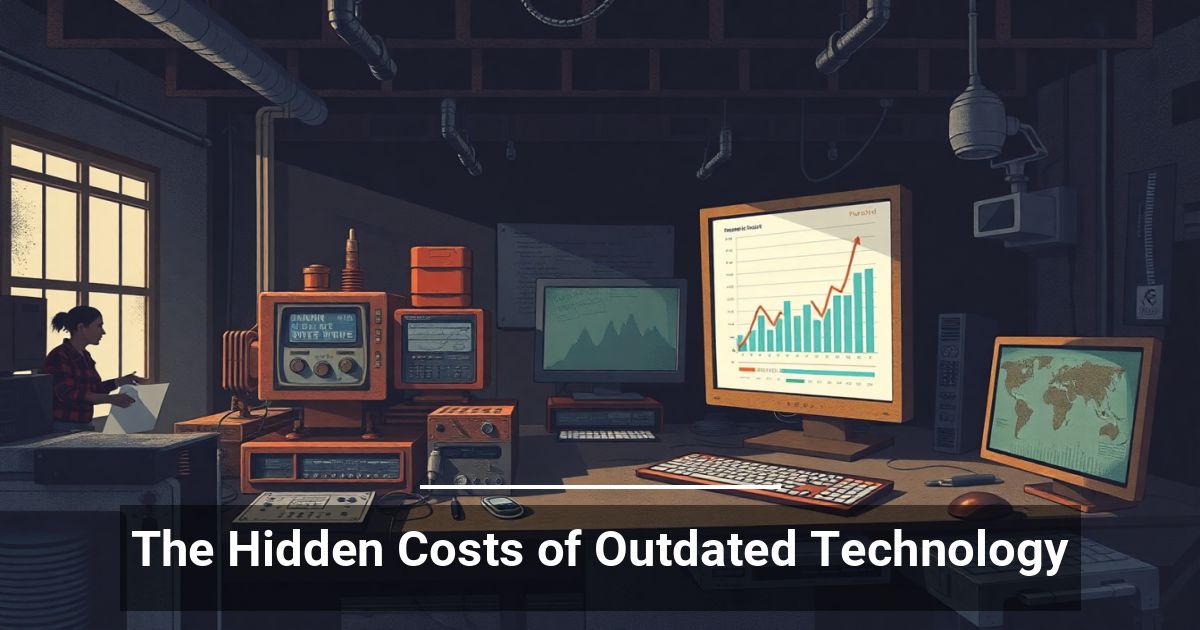
If your software still opens, runs, and seems to get the job done, it can be tempting to leave it alone.
Many business owners follow the mindset of "if it isn't broken, don't fix it." Unfortunately, when it comes to business technology, that approach often creates costly problems behind the scenes. Outdated software can expose your company to cybersecurity risks, reduce productivity, increase downtime, and even create compliance issues.
What appears to be a cost-saving decision today can become a major expense tomorrow.
Outdated Software Creates Serious Security Vulnerabilities
One of the biggest dangers of outdated software is the increased risk of a cyberattack.
Software vendors regularly release updates and security patches to address newly discovered vulnerabilities. Once software reaches end-of-life status, those updates stop. Any security flaws that remain become permanent weaknesses that cybercriminals can exploit.
Hackers actively target outdated systems because they are often easier to compromise than fully supported platforms.
For businesses that store customer information, financial data, employee records, or proprietary information, a single breach can have devastating consequences, including:
- Data loss
- Business disruption
- Regulatory penalties
- Legal expenses
- Reputational damage
- Lost customer trust
The cost of recovering from a cyberattack often far exceeds the cost of maintaining current software.
Legacy Software Slows Employee Productivity
Outdated software doesn't just create security concerns. It can also have a significant impact on day-to-day operations.
As software ages, performance issues become more common. Employees may experience:
- Slow loading times
- Frequent freezing or crashing
- Delayed system responses
- Compatibility problems
- Increased troubleshooting requirements
Even small delays can add up when employees rely on business applications throughout the day.
When technology slows your team down, productivity suffers, customer service declines, and operational costs increase.
Modern Business Applications May Not Work Properly
Today's businesses depend on connected systems.
Accounting platforms, customer relationship management (CRM) software, Microsoft 365, cloud applications, communication tools, and cybersecurity solutions are designed to integrate with one another.
However, outdated software often lacks compatibility with newer applications and cloud services.
This can force employees to:
- Manually transfer data between systems
- Create unnecessary workarounds
- Duplicate efforts
- Spend additional time correcting errors
Instead of improving efficiency, technology becomes a barrier to getting work done.
Outdated Software Increases Downtime
Many organizations delay upgrades to avoid spending money today.
Unfortunately, aging software often leads to more costly disruptions later.
Older systems tend to crash more frequently, experience performance degradation, and require more technical support. What begins as a minor inconvenience can quickly turn into significant operational downtime.
The true cost of downtime includes:
- Lost employee productivity
- Missed deadlines
- Reduced customer satisfaction
- Emergency IT support costs
- Lost revenue opportunities
For many businesses, a single unexpected outage can cost more than a planned software upgrade.
Compliance Risks Continue to Grow
Many industries face strict cybersecurity and data protection requirements.
Businesses in accounting, financial services, healthcare, manufacturing, engineering, and professional services are increasingly expected to maintain secure and supported technology environments.
Running outdated software can increase the likelihood of:
- Failed compliance audits
- Cyber insurance issues
- Regulatory penalties
- Contract violations
- Data security concerns
Regulators and insurance providers expect businesses to address known vulnerabilities. Using unsupported software can make it difficult to demonstrate reasonable security practices.
Why Software Updates Should Be Part of Your IT Strategy
Software updates are not simply a maintenance task. They are an essential part of protecting your business.
Regular updates help:
- Strengthen cybersecurity defenses
- Improve software performance
- Reduce downtime
- Support business growth
- Maintain compliance requirements
- Ensure compatibility with modern applications
Businesses that proactively manage their technology environments are typically more secure, productive, and resilient than those relying on outdated systems.
Protect Your Business Before Problems Start
Most companies do not realize the risks of outdated software until they experience a security incident, major outage, or compliance issue.
The best approach is prevention.
At Ironside IT Partners, we help businesses throughout New Jersey, South Jersey, the Greater Philadelphia area, and Delaware keep their technology secure, supported, and aligned with business goals. Our managed IT services, cybersecurity solutions, and proactive technology management help organizations reduce risk and avoid costly disruptions.
If you're unsure whether outdated software is creating hidden risks for your business, now is the time to evaluate your environment before a small issue becomes a major problem.
Schedule a Discovery Call Here.