Many New Jersey business owners still believe the same thing:
"We're too small to be targeted by hackers."
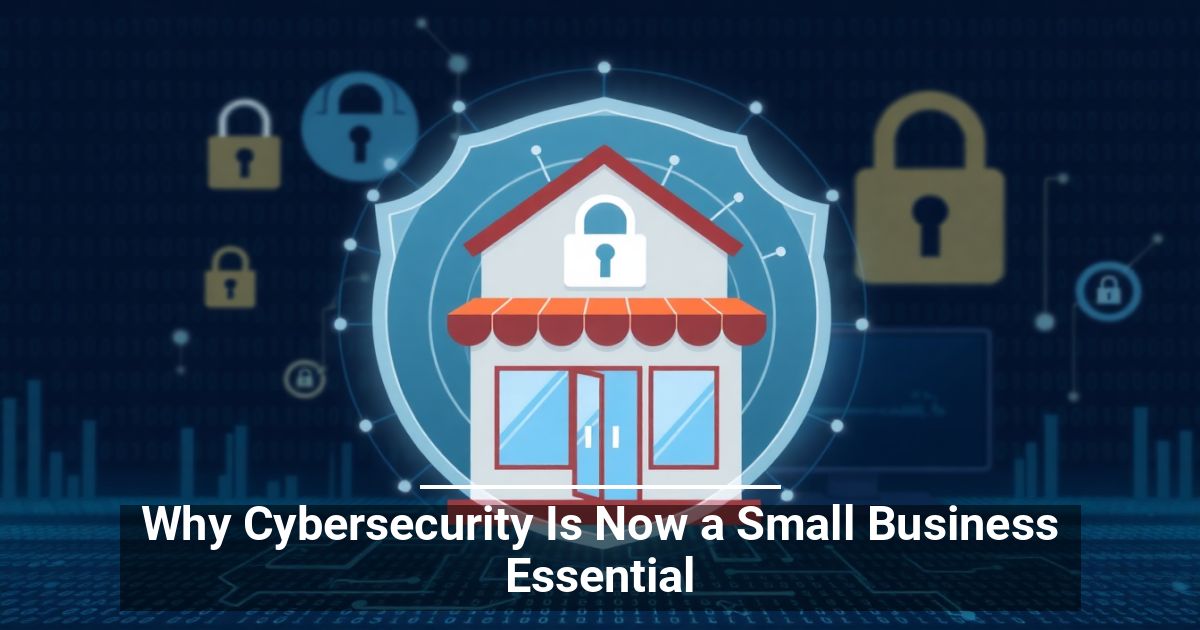
Unfortunately, cybercriminals don't see it that way.
Small and midsize businesses throughout New Jersey are increasingly becoming targets because attackers know these organizations often have limited IT resources and fewer cybersecurity protections in place.
If your company uses email, stores customer information, accepts payments, or relies on technology to operate, your business is a potential target.
The question isn't whether your New Jersey business is large enough to be attacked.
The question is whether you're prepared.
Why New Jersey Small Businesses Are Being Targeted
Cybercriminals aren't just targeting large corporations.
Many attacks are automated, meaning hackers use tools that continuously scan the internet looking for vulnerable businesses. They don't necessarily care whether you're a Fortune 500 company or a 20-person accounting firm in South Jersey.
Common cyber threats facing New Jersey small businesses include:
- Ransomware attacks that lock files and disrupt operations
- Phishing attacks designed to steal credentials and financial information
- Business email compromise (BEC) scams impersonating vendors or executives
- Malware infections that spread through business networks
- Data breaches exposing customer and employee information
- Insider threats caused by mistakes or malicious actions
For many organizations, a successful cyberattack can result in:
- Lost productivity
- Operational downtime
- Financial losses
- Legal expenses
- Reputational damage
- Regulatory penalties
Start With a Cybersecurity Risk Assessment
You can't protect what you don't fully understand.
A cybersecurity risk assessment helps identify critical business systems, vulnerabilities, and potential security gaps before attackers find them.
Every New Jersey business should regularly review:
- User access permissions
- Software update status
- Backup systems
- Remote access security
- Third-party vendor access
- Network security controls
Identifying weaknesses early allows you to address them before they become costly problems.
Train Employees To Recognize Cyber Threats
Employees remain one of the most common targets for cybercriminals.
Attackers frequently use phishing emails, fake invoices, and social engineering tactics to trick employees into revealing sensitive information or clicking malicious links.
Regular cybersecurity awareness training should teach employees how to:
- Identify phishing emails
- Create strong passwords
- Recognize suspicious activity
- Avoid malicious websites and downloads
- Report security concerns immediately
- Safeguard company devices and data
Creating a culture of cybersecurity awareness is one of the most effective ways to reduce risk.
Enable Multi-Factor Authentication (MFA)
Passwords alone are no longer enough to protect business systems.
Multi-factor authentication (MFA) adds an additional layer of security by requiring users to verify their identity using a second factor, such as a mobile device or authentication application.
Even if passwords are compromised, MFA can often prevent unauthorized access.
MFA should be enabled on:
- Microsoft 365 accounts
- Email systems
- Remote access platforms
- Financial applications
- Cloud services
Regularly Back Up Business Data
Data loss can happen for many reasons, including ransomware, accidental deletion, hardware failure, and natural disasters.
Every business should maintain secure, regularly tested backups of critical data.
A strong backup strategy includes:
- Automated backups
- Offsite or cloud-based storage
- Multiple copies of important data
- Routine recovery testing
- Protection for cloud applications like Microsoft 365
Backups are only valuable if they can be successfully restored when needed.
Protect Endpoints With Advanced Security Solutions
Today's workforce is increasingly mobile.
Employees often access company resources from laptops, smartphones, tablets, and home offices.
Endpoint Detection and Response (EDR) solutions help monitor, detect, and respond to suspicious activity across these devices.
EDR solutions provide:
- Continuous security monitoring
- Threat detection and response
- Greater visibility into endpoint activity
- Faster incident containment
For businesses supporting remote or hybrid work environments, endpoint security is essential.
Proactive Cybersecurity Is a Business Requirement
Cybersecurity is no longer optional for New Jersey businesses.
Strong cybersecurity protects more than technology. It protects customer relationships, employee productivity, company reputation, and business continuity.
Organizations that take a proactive approach to cybersecurity are far more likely to avoid costly downtime and data breaches.
The best time to strengthen your cybersecurity is before an incident occurs.
About Ironside IT Partners
Ironside IT Partners is a trusted provider of managed IT services, cybersecurity solutions, and IT support for small and midsize businesses throughout New Jersey, the Greater Philadelphia area, and Delaware. Since 2005, we've helped organizations reduce technology headaches, strengthen cybersecurity, improve productivity, and align their IT strategy with their business goals.
Whether you need fully managed IT services, co-managed IT support, cybersecurity protection, Microsoft 365 management, or strategic IT consulting, our team is here to help.
Learn more about our:
Have questions about your current technology environment? Schedule a free, no-obligation Discovery Call with our team to discuss your business goals, technology challenges, and opportunities for improvement.
👉 Book Your Discovery Call: https://www.ironsideit.com/discoverycall/