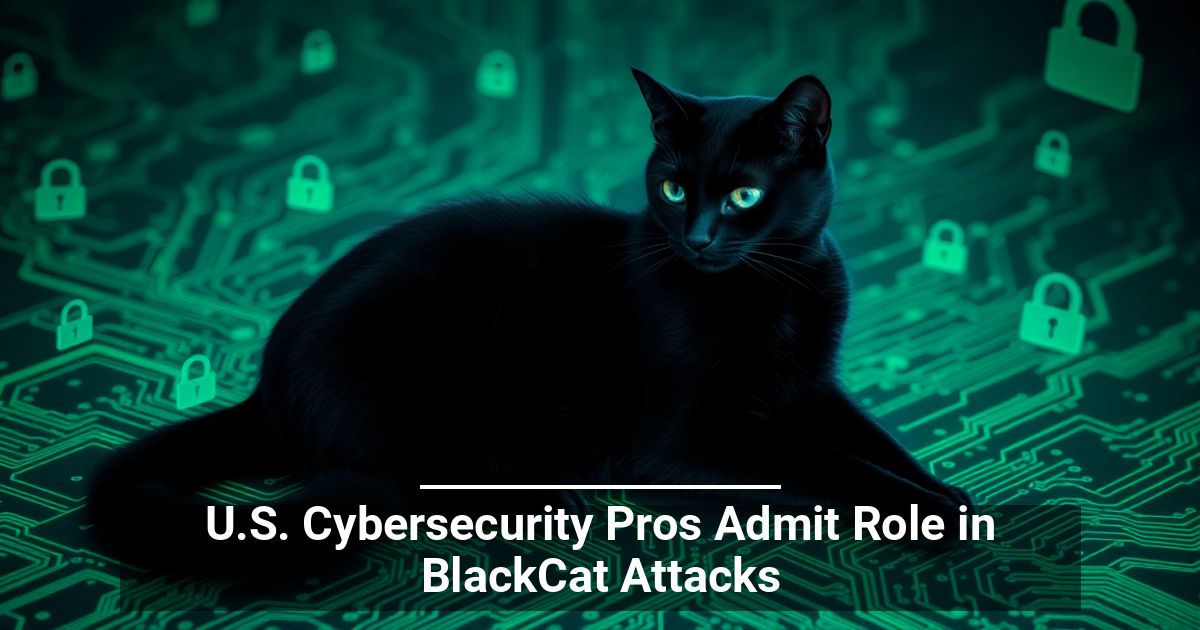
BlackCat ransomware has been back in the news—but this time for a reason that should give business owners pause.
In early November 2025, federal investigators revealed that three U.S.-based cybersecurity professionals were suspected of secretly working as affiliates for the ALPHV (BlackCat) ransomware group. More recently, two of those individuals pleaded guilty to taking part in at least one successful extortion attempt, along with several failed ones.
The uncomfortable reality? Cyber threats don’t always come from unknown outsiders. Sometimes they come from people who understand defenses better than most.
When Trusted Experts Become the Threat
What makes this case particularly troubling is who these individuals were supposed to be. They weren’t random criminals. They were trained cybersecurity professionals—people hired to defend systems, identify weaknesses, and stop attacks.
According to prosecutors, they used their insider knowledge of security tools, network architecture, and common defense strategies to break into organizations, deploy ransomware, and demand payment.
While swift law enforcement action is reassuring, the bigger lesson is sobering: trust alone isn’t a security strategy. Even vetted professionals or vendors can introduce risk if proper oversight and controls aren’t in place.
For small businesses that rely on third-party IT support, this reinforces the importance of layered security, accountability, and transparency to reduce the risk of data breaches.
Why Small Businesses Are Still in the Crosshairs
There’s a common misconception that groups behind BlackCat cyberattacks only target large enterprises. In reality, small and mid-sized businesses are often easier targets.
Limited internal IT resources, older systems, and informal processes make smaller organizations attractive. Once attackers gain access, they can encrypt files, disrupt operations, and pressure owners into paying to restore access.
Even when attacks fail, the fallout includes downtime, investigation costs, and damage to customer trust. That’s why proactive small business cybersecurity matters more than ever.
Practical Steps to Strengthen Your Defenses
You don’t need an enterprise budget to reduce your risk. Solid fundamentals go a long way. Key cybersecurity best practices include:
-
Restricting access by role: Employees should only access what they need
-
Patching systems promptly: Unpatched software is still a top attack vector
-
Enforcing multi-factor authentication: Especially for email, remote access, and admin accounts
-
Training employees regularly: Awareness reduces phishing and social engineering success
-
Segmenting networks: Limit how far attackers can move if one device is compromised
-
Maintaining tested backups: Offline backups allow faster, calmer recovery
These controls won’t eliminate risk, but they dramatically reduce the impact of ransomware attacks.
Choosing Outside Help With Eyes Open
Many businesses need external support for monitoring, response, or security strategy—and the right partner can be a major asset. But this case highlights why due diligence matters.
Ask tough questions. Review references. Understand how vendors protect their own systems. Look for clear ethics policies, internal security controls, and accountability measures.
Strong cybersecurity isn’t about blind trust. It’s about visibility, verification, and layered protection—no matter where the threat originates.
Trust Is Important. Controls Are Essential.
BlackCat cyberattacks are a reminder that preparation must back trust. Controls, monitoring, and response planning are what keep incidents from turning into disasters.