On the surface, everything looks fine.
Your employees are working, customers are being served, and business is moving forward as usual.
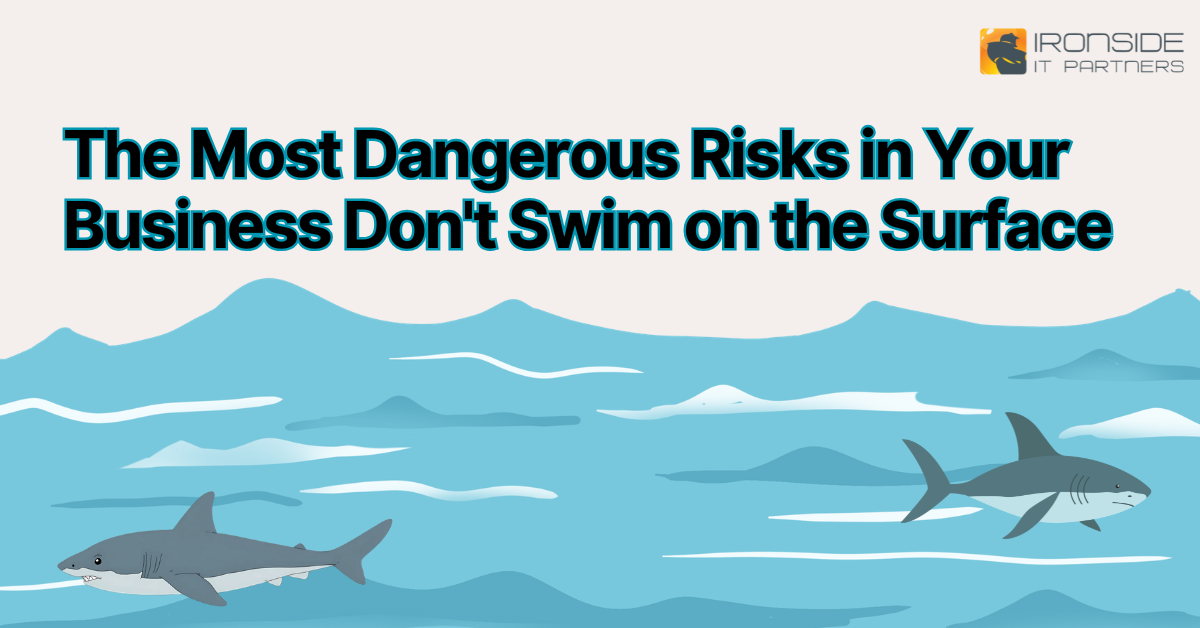
That's what makes Shark Week so fascinating every year. The danger isn't what you can see above the water. It's what's happening underneath the surface.
Cybersecurity threats often work the same way.
The biggest risks facing businesses today rarely announce themselves. They blend into normal operations, trusted relationships, and everyday employee activity until suddenly money is missing, systems are locked, or sensitive data has been compromised.
Summer can create even more opportunities for cybercriminals. Employees take vacations, schedules become less predictable, and key decision-makers are often out of the office.
Here are three hidden cybersecurity risks every business should be paying attention to this season.
1. Business Email Compromise and Fake Invoices
Many cyberattacks don't begin with malware or hacking tools.
They begin with a convincing email.
Business Email Compromise (BEC) attacks occur when cybercriminals impersonate a trusted vendor, supplier, executive, or business partner. The goal is simple: convince someone to transfer money or share sensitive information.
The email often looks completely legitimate.
During the summer, these attacks become even more effective because approval processes are frequently disrupted. When the person who normally reviews invoices or authorizes payments is on vacation, requests are often routed to someone less familiar with standard procedures.
Attackers take advantage of that uncertainty.
To reduce risk:
- Verify payment requests through a separate communication channel.
- Confirm banking changes verbally with known contacts.
- Train employees to be cautious of urgent financial requests.
- Require multiple approvals for large transactions.
A quick phone call can prevent a costly mistake.
2. Phishing Attacks Targeting Busy Employees
Phishing remains one of the most successful cyberattack methods because it targets people rather than technology.
Cybercriminals understand that employees are busy.
A password reset notification arrives minutes before a meeting. A text message appears to come from IT. An email requests urgent approval for a payment or document.
The message creates urgency, and urgency leads to mistakes.
The most effective cybersecurity defense isn't simply software. It's creating a culture where employees feel comfortable slowing down and asking questions when something seems unusual.
Encourage your team to pause when they encounter:
- Unexpected login requests
- Unfamiliar links
- Requests for sensitive information
- Sudden payment instructions
- Messages that create pressure or urgency
Cybercriminals rely on speed.
Taking a moment to verify a request often stops an attack before it starts.
3. Third-Party and Vendor Security Risks
Many businesses focus heavily on securing their own systems but overlook the risks introduced by vendors and service providers.
Every software platform, contractor, consultant, and third-party provider with access to your systems creates a potential pathway into your environment.
This is commonly referred to as supply chain risk.
Examples include:
- Vendors with access to sensitive business data
- Contractors with active user accounts
- Integrated software platforms connected to business systems
- Service providers with administrative access
If one of those organizations experiences a security breach, your business could be affected as well.
Every business should be able to answer three questions:
- Which vendors have access to our systems or data?
- What level of access do they have?
- Who is responsible for managing those relationships?
If those answers aren't clear, there may be hidden risk beneath the surface.
The Biggest Cybersecurity Threats Are Often the Hardest to See
Most successful cyberattacks don't begin with obvious warning signs.
They start with small vulnerabilities that go unnoticed:
- An employee who clicks a convincing email
- A vendor account that was never reviewed
- A payment request that wasn't verified
- Access permissions that were never removed
The businesses most likely to avoid cyber incidents aren't necessarily the ones with the biggest budgets.
They're the ones that actively identify and address risks before attackers can exploit them.
Summer is often when businesses become distracted. Cybercriminals know this and frequently increase their activity during periods when employees are traveling, schedules are disrupted, and oversight is reduced.
Now is a good time to evaluate where your organization may be vulnerable before a small issue becomes a major problem.
About Ironside IT Partners
Ironside IT Partners is a trusted provider of managed IT services, cybersecurity solutions, and IT support for small and midsize businesses throughout New Jersey, the Greater Philadelphia area, and Delaware. Since 2005, we've helped organizations reduce technology headaches, strengthen cybersecurity, improve productivity, and align their IT strategy with their business goals.
Whether you need fully managed IT services, co-managed IT support, cybersecurity protection, Microsoft 365 management, or strategic IT consulting, our team is here to help.
Learn more about our:
Have questions about your current technology environment? Schedule a free, no-obligation Discovery Call with our team to discuss your business goals, technology challenges, and opportunities for improvement.
👉 Book Your Discovery Call: https://ironsideit.axionthemes.com/discoverycall/